
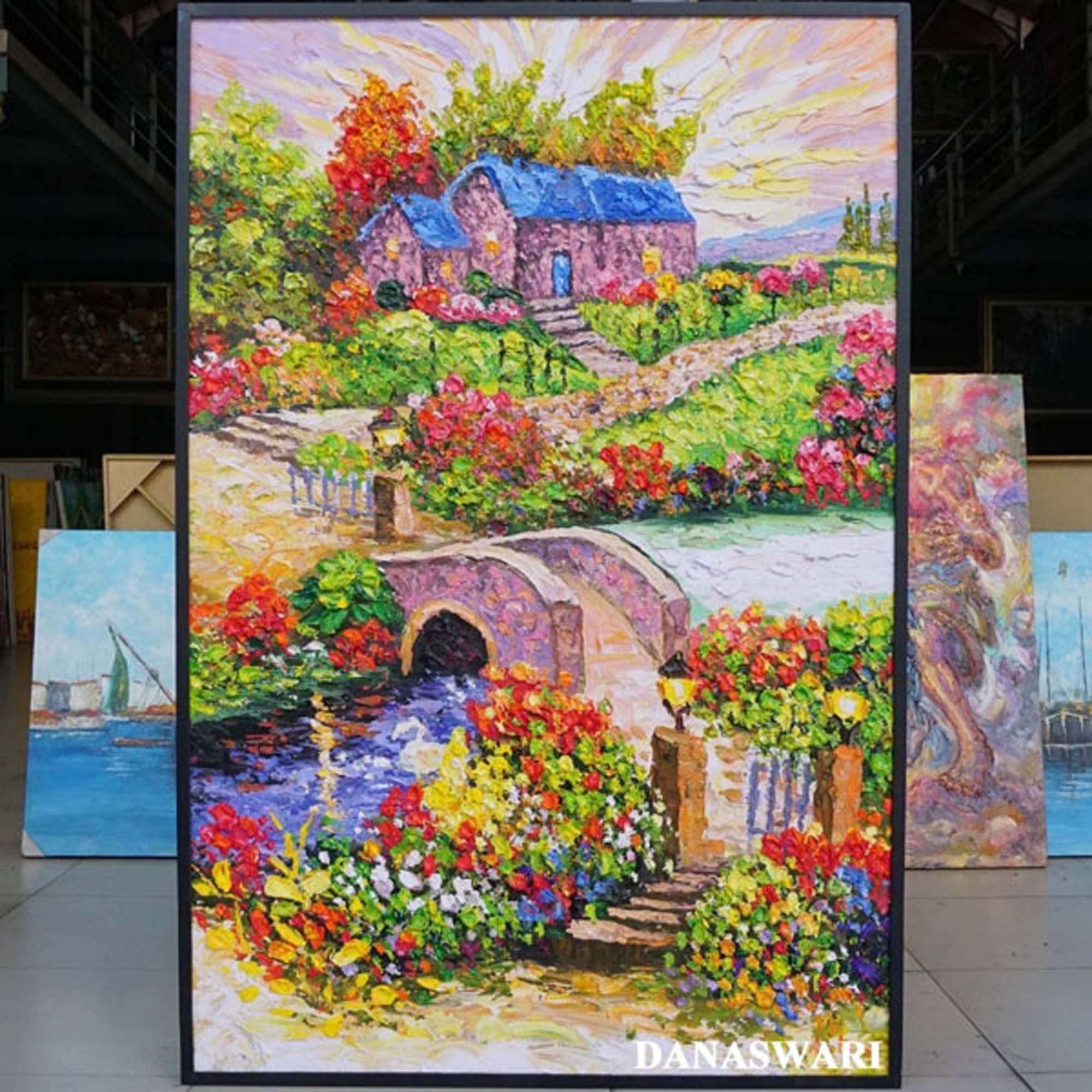
European Painting-DSW19-0071
Rp0
Description
European Painting
European painting spans centuries of artistic evolution, from the religious iconography of the Middle Ages to the expressive techniques of the Renaissance, and from the drama of Baroque to the bold colors of Impressionism. European artists have continuously redefined visual expression, capturing the essence of humanity, nature, and the divine
European Art Description
Historically, the art of painting is strongly associated with the image. Prehistoric remains show that since thousands of years ago, human ancestors had begun to make drawings on cave walls to portray important parts of life.
A painting or drawing can be made using only simple materials such as charcoal, chalk, or other materials. At one point, there were certain people in a prehistoric society who spent more time drawing than looking for food. They become adept at drawing and begin to discover that certain shapes and arrangements, when arranged in such a way, appear more appealing to the eye than usual. And they begin to find a sense of beauty in their activities and continue to do so until they become more and more skilled. They were the first artists on earth and that’s when the activities of drawing and painting began to tend to become artistic activities.
The history of modern art in Europe or the West has a clear and firm common thread. The plot and its expanse show an interconnected unity. One style or flow arises as a result of opposing (reacting to) the previous flow/force. The opposition or reaction is based on the very strong argument or conception of the artist. Basically, the journey or development of Western art cannot be separated from the struggle for the values of freedom and creativity. The value of the freedom of one style is opposed by the value of the freedom of another style, both in terms of freedom in terms of theme selection, aesthetics as well as techniques and creative processes.

 English
 Arabic